Sunday, May 13, 2012

Success and Failure

Success and Failure


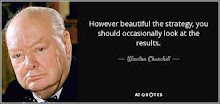
                One basic part of any strategy is success and failure. Everyone goes through life making choices that either work or don’t work. A major part in the success, failure matrix is deciding when to pull the plug, deciding if you want to keep on the path you are on despite a failing system, and when to know how and when to let something fail.
            The first thing to discuss in any success/failure discussion is deciding when to pull the plug. We have all worked on things: cars, projects, games that just were not working out. Now, I know that perseverance is a heavenly quality to have and that never giving up is a wonderful thing, but what I am proposing enhances just that. To do things a little wiser and more intelligently, you do not want to waste precious resources into a project that doesn’t work. Say you have chosen a plan of action, you have put lots of effort, time, and resources into it but you’re not getting the proper results you are looking for. If you have done your research and found that you are doing just doesn’t work then it might be a good idea to pull the plug. You will be the best judge to say this is going to work or this is not going to work, so let’s do something else. I would say the best thing to do is set check points for your project. They can be small goals that you place along in your project or just certain points when you review your progress, so you can judge if this is really worth your while or not.
          The second thing to discuss is deciding to keep on the path that you are on despite a failing system. I believe in perseverance in all things, sometimes you need to stick to the path you’re on to get success. This should be in no means an excuse to keep a failing system going. If you have done your checkpoint review then you should know enough to make a decision in keeping the path you’re on or junking what you have for a better system. I believe too many people abuse this step. If something is not working because it was a bad idea to begin with, or something just doesn’t have what it takes to succeed then scrap it for a better system. People get into ruts at this step and run themselves and run themselves into the ground because they are not willing to admit that it just isn’t working. Do not let this person be you. If you scrap something you can always make save it for later and if some advancements have been made then you can come back to it, but don’t put all your money on the wounded horse, diversify and seek other options.
         The last thing to discuss is knowing how and when to let something fail. By no means should anyone keep a system going that they know is not working, If you are worried about what will happen when it fails then maybe you shouldn’t be in the business your in. Everyone needs hard lessons from time to time; we go through things like failure for a reason. Keeping something going that does not work and pretending it does is living a lie and should be stopped immediately. There is a natural course of action that life takes, if you let something fail you are allowing those forces to work in your life and allow it to shape your life for the future. Knowing what doesn’t work is half the battle. Hard lessons learned are often have monumental impact on our lives that pave the way for actual success. An example to use would be a job, yes, everyone needs a job, but say you are to the point in your career that you are loosing your hair, loosing sleep, and just plain fed up with it. You know it isn’t working out anymore, instead of just pretending it is working out, quit. Find another job. There are two types of people in this world, those that stay in dead end jobs because they are scared they won’t find any other kind of work out there and then there are the types of people that quit, go on to college, and make more money then the person who stayed in that dead end job, remained unhappy. While those that left went on to fulfill their dreams because they were not afraid of “what might happen”.
            Part of success and failure is imbedded into any kind of strategy, some will fail and some will succeed. You need to know when to pull the plug, decide if you want to keep on doing the same thing despite utter failure, and know when to let something fail. Do not be afraid of the future do your homework, if there is a glimmer of light at the end of the tunnel, pursue it, if it’s only dark days, rain , and no sunshine; can it and go after something else.

Sunday, March 25, 2012

Sorry

Sorry it's taking me so long to post, I go to college full time and as it gets closer to the end of the semester we get swamped with a bunch of papers. I'll have plenty of time to write more during the summer. I plan on expanding on the basics by adding Time duration and probably start on another topic. So props out to anyone that doesn't think that patience is just something other people do.

Saturday, March 3, 2012

The Basics: Resources


         The basics:  Well you have to start somewhere and you might as well start with your resources. One of the most basic concepts to developing any kind of strategy is to know how much resources you are going to be working with. Some people might be blessed with lots of resources to play around with will others will have only the bare minimum or not even that and will have to incorporate gathering resources into the strategy.
            For those that have resources a plenty then you have more room to make mistakes and you can increase your risk as losing precious resources will not be much of a bother to you. Say for instance, you were building a house and you had two truck loads of lumber to build that house with. Well you wouldn’t be too worried about the precision with which your carpenters were cutting with. You could be a little more careless about how accurate the cuts were meaning that if they cut a piece of lumber with two feet left over just to get a one foot piece, well you would just have a lot of left over wood. Then from those resources if you felt like it then you could even build something out of that.
           For those that have moderate resources, continuing with the house scenario say you only got one truckload of lumber to use, then you would be concerned a little bit more about how accurately the carpenters were cutting with.  You would tell the carpenters to cut so that you would not be wasting so much lumber. So that one foot piece of lumber used would not be the piece that you cut but what is actually left over. So instead of having enough lumber to build you another floor or room, you would only have enough to build you a nice tree house or something like that.
          Finally, those of us that have very scare resources then having the carpenters cut with extreme precision and having them do it right the first time would be of utmost importance as you only have say half a truckload and that was the last they had available for six months and you had to get it built in three months. This is were strategy plays a huge role in how we do things. Myself I like to do things knowing that I don’t have very much to work with as I believe this allows for some real strategy to come into play. The less we have to work with forces us to really think about how we are going to approach the project or task that is set out before us.
           The three scenarios I gave you were plenty of resources, moderate resources, and scarce resources to work with. Now every amount of resource we have will differ but these three will get you started and don’t think that this just applies to building a house you can use this model for anything, Say, amount of paper you have vs. how much you want to print out, amount of gas that you have for a generator for doomsday, or how big of a cake to make for the company picnic.

Hello everybody

Well hello everybody, as the title suggests "Everything Strategy" is about everything strategy. This is my first time blogging so please bare with me. A little bit about me is that I have just started college and am going for an English degree. It was told to me that having a blog would be a great way of building experience so I am trying this thing out. What I really want to do is to talk strategy. We've all heard the term strategy before and many of use strategy in different ways in our life. I hope to post at least one topic of discussion on this blog that will deal with various aspects of strategy. I don't mean to discriminate on what things will be strategized, but the whole point of strategy is to have a strategy. So as I find things I will blog about them and hopefully have a fun time in the process.